

Infrared Heater Materials And Quenching Cracks of Mold Steel After Heat Treatment
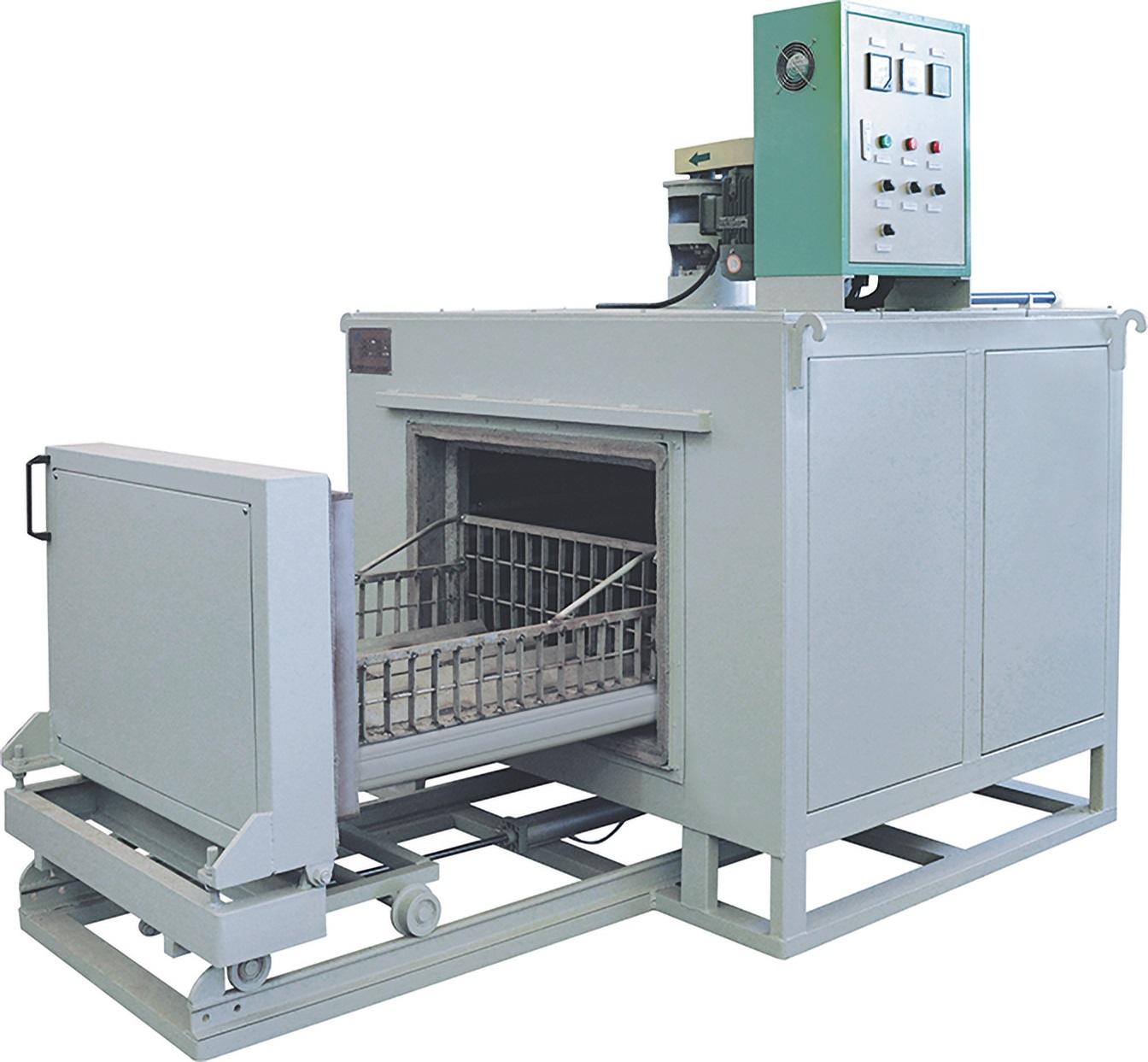
In the heat treatment of mold steel, quenching is a common process. However, due to various reasons, sometimes quenching cracks may occur, leading to the abandonment of previous efforts. Analyzing the causes of cracks and taking corresponding preventive measures has significant technical and economic benefits.
The crack is axial and has a thin and long shape. When the mold is completely quenched or quenched without a center, the center transforms into quenched martensite with a larger specific volume, generating tangential tensile stress. The higher the carbon content of the mold steel, the greater the tangential tensile stress generated. When the tensile stress exceeds the strength limit of the steel, it leads to the formation of longitudinal cracks. The following factors further exacerbate the generation of longitudinal cracks in the infrared mold heating furnace.
(1) Steel contains a large amount of low melting point harmful impurities such as S, P, Sb, Bi, Pb, Sn, As, etc. When rolling the steel ingot, it exhibits a severe longitudinal segregation distribution along the rolling direction, which is prone to stress concentration and the formation of longitudinal quenching cracks or longitudinal cracks formed by rapid cooling of raw materials after rolling are not processed and retained in the product, leading to the expansion of final quenching cracks and the formation of longitudinal cracks.
(2) When the mold size is within the range of quenching crack sensitive dimensions of steel (8-15mm for carbon tool steel and 25-40mm for medium and low alloy steel) or when the selected quenching infrared mold heating furnace cooling medium greatly exceeds the critical quenching cooling rate of the steel, longitudinal cracks are easily formed.
(3)Strictly inspect the storage of raw materials, and do not put into production steel with excessive harmful impurity content. Try to use vacuum smelting, external refining or electroslag remelting of mold steel, improve the heat treatment process, use vacuum processing heat, protective atmosphere heating, and fully deoxygenated salt bath furnace heating and analysis quenching, isothermal quenching.
The more common filament material used for electric infrared heaters is tungsten wire, which is coiled to provide a larger surface area.
When light is not needed or not needed in the heater, ceramic infrared radiation heaters consist of 8-meter long coiled alloy resistance wires that emit uniform heat throughout the entire surface of the heater. Ceramics can absorb 90% of the radiation, and because absorption and emission are based on the same physical reasons as each object, ceramics are very suitable as materials for infrared heaters.
Industrial infrared heaters sometimes use a gold coating on quartz tubes to reflect infrared radiation and guide it to the product to be heated. Therefore, the infrared radiation irradiated on the product has actually doubled. The use of gold is due to its antioxidant properties and a very high infrared reflectance of about 95%.

 English
 Arabic
 French
 Spanish
 Portuguese
 Turkish
 Dutch
Dutch
 Italiano
 Russian
 Romaian
 Portuguese (Brazil)
 Greek
Greek
 简体中文
简体中文
 日本語
日本語
 한국어
한국어
 繁体中文
繁体中文